

Most water leaks do their damage out of sight. A pinhole in a copper line under the floor, a cracked fitting inside a shower wall or a broken service pipe under the lawn can run for months before anyone notices. By the time you do, the clue is often a Watercare letter about higher than normal use, or a patch of paint that will not stay dry.
Our job is to find the leak precisely, so the only hole made is the one needed to fix it. We combine meter testing, acoustic listening, thermal imaging and pressure testing, then explain what we found in plain language with photos.
Pricing: quotes are free, and every job gets a fixed price before we start, so there are no surprises on the invoice.
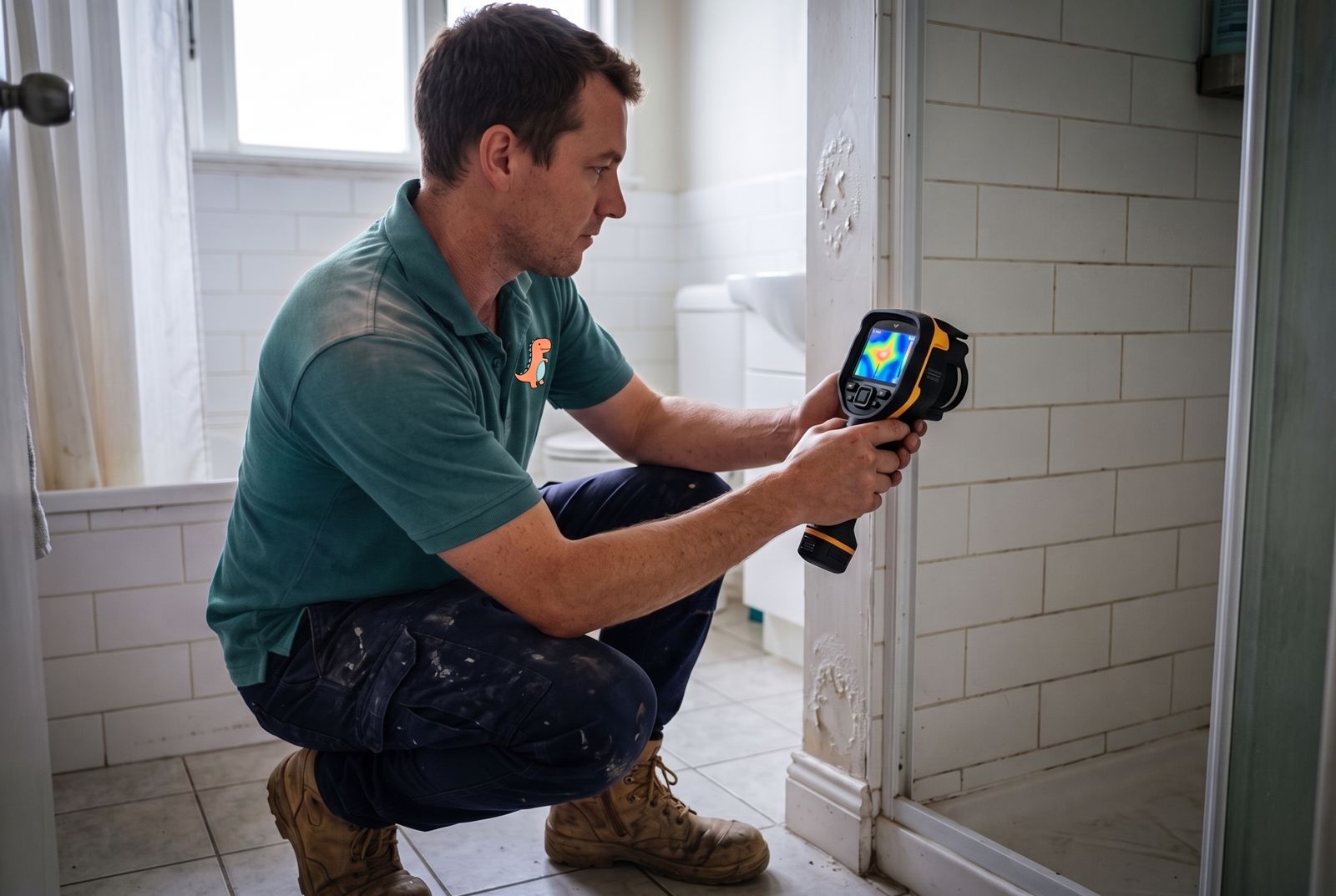
Leak Detection Jobs We Handle Across Auckland
- Water leak detection
- Hidden leak under a slab or floor
- Watercare high bill investigation
- Leak under the house
- Thermal camera leak finding
- Pressure testing pipes
Signs you have a hidden leak
Leaks give themselves away in small ways long before water appears on the floor. Look out for: If water is pouring out somewhere you can see, skip the search and book burst pipe repairs straight away.
- A water bill noticeably higher than the same period last year
- The meter dial still moving when every tap and appliance is off
- Musty smells, mould spots or skirting boards swelling
- Warm patches on a tiled or concrete floor, which can point to a hot water line
- A soggy patch in the lawn or driveway that never dries out
- The cylinder or pressure pump kicking in when nobody is using water
How we find leaks without guesswork
We start at the meter. With everything off, we watch the dial and isolate sections of the house to work out whether the leak is on the hot side, the cold side, inside or out. That alone narrows the search a long way.
Next comes the equipment. Acoustic ground microphones pick up the hiss of water escaping under pressure through concrete, timber or soil. Thermal cameras show the cool or warm trail a leak leaves in walls and floors. Pressure testing individual lines confirms which one is losing water. For leaks under paths and lawns, we trace the pipe route first so we listen in the right places.
How It Works
Getting your Watercare leak allowance
Watercare offers a leak allowance, a partial credit on your account, to encourage people to fix leaks quickly. The timing rules matter. You generally need to have fixed the leak within 21 days of Watercare's letter or email about a higher than normal bill, or before that notice was sent, and Watercare may decline applications that arrive long after the repair.
Once we have found and repaired the leak, we give you an itemised invoice and a short leak report showing where it was and what we replaced. That is the evidence Watercare looks for, so book the repair as soon as the leak is confirmed. If you want early warning next time, we can fit leak sensors with an automatic shut-off valve.
What affects the cost
Most homes are straightforward, but some take longer. The price moves with:
- Whether the leak is inside the house or on a long underground service pipe
- Floor type: suspended timber floors are easier to search than concrete slabs
- How many separate lines need isolating and pressure testing
- Whether you want the repair done on the same visit
- Commercial or multi-unit sites with shared or sub-meters
Leaks in Auckland homes: what we usually find
Housing stock shapes the hunt. In villas and bungalows, leaks are often in old galvanised or copper lines running under the floor, where a quick look from the subfloor can confirm them. Where those lines keep failing, repiping is the lasting fix. Monolithic plaster homes from the 1990s and early 2000s need extra care, because water inside a wall can damage framing and cladding long before it shows inside.
Newer slab-on-ground townhouses in places like Hobsonville and Flat Bush hide their pipes in concrete and inside walls, which is where acoustic gear earns its keep. Rural blocks around Kumeu and Clevedon often have long polythene supply lines from the road, and a single failed joiner on that water main can lose a surprising amount of water.
Why Choose Cheeky's Plumbers for Leak Detection
Meter test before any gear
We start at the meter and isolate sections of the house to work out hot or cold, inside or out, which narrows the search before any equipment comes out.
Acoustic and thermal equipment
Ground microphones, thermal cameras and line-by-line pressure testing mean the only hole we make is the one needed to fix the leak.
Paperwork Watercare looks for
You get an itemised invoice and a leak report with photos showing where the leak was and what we replaced, ready for a leak allowance application.
Sensors and shut-off on request
For holiday homes, rentals and anyone who has already had a flood, we can fit a motorised shut-off valve with leak sensors under the cylinder, dishwasher and vanities, on your side of the meter.
Fixed price
The price is agreed before work starts.
Leak Detection FAQs
How do I check for a leak myself?
Turn off every tap and appliance, note the numbers on your water meter, and check again after an hour without using water. If the reading has changed, water is going somewhere.
Will you have to cut holes in my walls?
Only once we know exactly where the leak is. The goal of detection is a single small access point instead of opening up whole walls or floors.
How long does leak detection take?
Most houses take one to two hours. Long underground pipes, slabs and commercial sites can take longer, and we tell you if that looks likely.
Can I claim a leak allowance from Watercare?
Often, yes. Watercare gives a partial credit if the leak is fixed promptly, generally within 21 days of their high usage notice. We supply the invoice and report you need.
Is the leak my responsibility or Watercare's?
Watercare owns the pipe and meter up to the meter outlet. Everything on your side of that point is yours to repair.
Can a hidden leak cause mould?
Yes. Moisture trapped in walls and under floors is a common cause of mould and timber decay, which is why it pays to find leaks early.
Leak Detection Near You
Find your suburb for local leak detection information, response times and nearby areas.
Leak Detection Guides
- Grey Polybutylene Pipe in NZ: Should You Replace It?
- Leaking Hot Water Cylinder: Causes, Lifespan and What to Do Now
Related Services
Emergency Plumber
Water through the ceiling at 2am does not wait for business hours, and neither do we.
View serviceBurst Pipes
Burst pipes cause more water damage in Auckland homes than almost anything else, especially in older villas and bungalows with galvanised steel or early polybutylene pipe.
View serviceRepiping
Old galvanised steel and grey polybutylene pipes fail with age.
View serviceLow Water Pressure
Weak showers and slow-filling baths are usually caused by a failing pressure valve, a partly closed toby, scaled-up pipes or a hidden leak.
View serviceBlocked Drains
Blocked sinks, showers, toilets and gully traps cleared fast.
View serviceHot Water Cylinders
Hot water cylinder replacement across Auckland.
View serviceSee all plumbing services or every service we offer.