
Water hammer is the bang you hear when fast moving water in a pipe is stopped suddenly, usually by a quick closing tap, a washing machine valve or a dishwasher. The moving water slams into the closed valve and sends a pressure surge back along the pipe, which shakes loose or poorly clipped pipes against the framing. It is usually fixed by securing the pipes, fitting an arrestor or lowering high mains pressure.
A single thud when the washing machine stops filling, or a knock every time someone flicks the kitchen mixer off, is easy to ignore. It is worth understanding, though, because the noise is a sign that the plumbing is taking a pressure spike every time it happens.
The quickest way to diagnose water hammer is to notice exactly when it happens. This guide matches each pattern to its usual cause, explains whether it can damage your pipes, and sets out the fixes from simplest to most involved.
What is water hammer?
Water hammer is a pressure surge caused by stopping a column of moving water too quickly. BRANZ's Level guide describes it as something that generally occurs in a high pressure system when the flow of water is suddenly stopped.
Water is heavy and does not compress. When it is moving through a pipe at speed and a valve snaps shut, all that momentum has nowhere to go. The energy travels back up the pipe as a shock wave, and if the pipe can move, it jumps and strikes whatever is next to it. Level notes it mostly occurs in metal pipes, although plastic pipes can be affected too.
Why do my pipes bang when I turn off a tap?
Because the tap closes faster than the water can slow down. Lever mixers and quarter turn taps with ceramic cartridges go from full flow to off almost instantly, which is ideal for convenience and terrible for pipe noise.
Older washer taps take several turns to close, so the water slows gradually and there is no surge. That is why a house can be silent for decades and then start banging the week a new kitchen mixer goes in. Closing the lever more gently helps, but the lasting fix is to stop the pipes moving or absorb the surge near the tap.
| When it happens | Likely cause | Usual fix |
|---|---|---|
| Lever mixer or quarter turn tap shut off quickly | Fast closing ceramic cartridge | Re-clip pipes, arrestor near the tap |
| Washing machine or dishwasher stops filling | Solenoid inlet valve snaps shut | Arrestor on the appliance supply |
| Toilet finishing its refill | Worn or chattering cistern inlet valve | Replace the inlet valve |
| Worse late at night | Higher mains pressure when demand is low | Pressure limiting valve |
| Pump on tank water stopping and starting | Pump cycling or pressure vessel fault | Pump or pressure vessel service |
Can water hammer damage pipes?
Yes, over time it can. Each surge puts extra stress on joints, valves and appliance hoses, and a pipe that is knocking against timber is wearing at the point of contact every time.
The most common casualties are the things with moving parts or rubber seals: washing machine and dishwasher inlet valves, flexible tap hoses, and the valves on a mains pressure hot water cylinder. Loose pipes that keep striking framing can also loosen their own joints. A bang once a week on one tap is a nuisance; banging through the whole house several times a day is worth fixing before something gives way.
Pressure matters here too. A surge adds to whatever static pressure the house already has, so a home that sits near the top of the normal range sees bigger spikes at every fast closing valve. That is why water hammer and dripping cylinder relief valves often turn up in the same house.
Pipes banging?
Cheeky's Plumbers finds out why, then fixes the cause, whether that is loose clips, an arrestor or a pressure valve.
Why does my washing machine make the pipes bang?
Washing machines and dishwashers fill through electric solenoid valves that shut in a fraction of a second. Level lists solenoid valves, such as those on washing machines, among the typical causes of water hammer.
Because a washing machine fills several times during a cycle, the bang repeats, which is why laundry noise is often the first sign. Fitting a water hammer arrestor on the tap feeding the machine is the targeted fix. It is also a sensible addition when a new laundry or kitchen is going in, since a modern appliance can bring fast closing valves into a house whose pipework was never set up for them.
How do you fix water hammer?
Match the fix to the cause: secure loose pipes, absorb the surge at the appliance, or reduce the pressure behind it. Most homes need one of these, not all three.
Pipe fixing is the first thing to check. Level recommends that pipes are rigidly fixed, do not touch the structure directly, and pass through framing in grommets or cushioned packers. In villas and bungalows in suburbs like Grey Lynn, copper or galvanised pipe often runs under a suspended timber floor on a few clips that have rusted or gone missing, so re-clipping the subfloor runs can quiet the whole house. Newer homes are not immune. In Silverdale's Millwater development, most homes date from the 2010s, and pipes fixed tight to studs inside walls can carry noise straight into bedrooms.
If you want it diagnosed properly, the water hammer service at Cheeky's Plumbers starts by reproducing the noise at each fixture, checking static pressure at the meter, then looking at how the pipes are fixed.
- Loose or unclipped pipes: re-clip with cushioned clips and packers
- One appliance causing it: fit an arrestor upstream of that appliance
- Worn cartridge or cistern valve: replace the part
- High pressure throughout the house: fit a pressure limiting valve
Do I need a water hammer arrestor?
You need one if a particular appliance or tap is causing the bang and the pipes are already properly secured. An arrestor is a small device with a sealed air or gas cushion behind a piston. When the surge arrives, the cushion compresses and absorbs it instead of the pipe.
An arrestor is not a cure for high pressure across the whole house. Level notes that mains pressure can be up to 900 kPa or even more in a few locations, and suggests a licensed plumber can fit a 350 kPa pressure limiting valve after checking it suits your fixtures and appliances. If the noise happens everywhere, a pressure reducing valve treats the cause for every outlet at once.
When should you call a plumber about banging pipes?
Call a plumber if the noise is getting worse, comes from the whole house, started after other plumbing work, or comes with dripping cylinder valves or leaking appliance hoses. Those are signs of high pressure or failing fixings rather than one fast tap.
A plumber will measure the static pressure, find the pipes that move, and tell you which fix will actually work. Cheeky's Plumbers does that across Auckland, and if a valve or cartridge needs replacing it can usually be done on the same visit. If you would rather not wait, you can book a visit online.
Frequently Asked Questions
Is water hammer dangerous?
It is rarely dangerous in the moment, but repeated surges wear out valves, hoses and joints. The real risk is a flexible hose or appliance valve failing and flooding a room, often when nobody is home. Treat frequent banging as a maintenance job rather than a curiosity.
Why do my pipes bang when nobody is using water?
Common causes are a toilet cistern finishing its refill, a hot water cylinder valve opening as the water heats, an irrigation controller switching on, or a pump on tank water starting and stopping. Note the time and listen near each fixture to narrow it down.
Can I fix water hammer myself?
You can close lever taps more gently and check that any pipes you can reach are clipped. Fitting arrestors, pressure limiting valves or replacing pipework is generally work for a licensed plumber, so leave those parts to a professional.
Do water hammer arrestors wear out?
They can. The cushion inside eventually loses its charge or the seal wears, and the arrestor stops absorbing the surge. If the bang returns after an arrestor has been working for years, the arrestor itself may need replacing.
Is a humming or groaning pipe the same thing?
Not quite. A steady hum while a tap is running usually comes from a vibrating valve part, a loose washer or high flow through a narrow pipe. Water hammer is a single bang or knock when flow stops. Both are worth checking, but the fixes are different.
Does water hammer happen with plastic pipes?
It can, though it is less common. BRANZ's Level guide says water hammer mostly occurs in metal pipes but can occur in plastic ones. Plastic pipe flexes more, so the noise is often softer, but poorly fixed runs can still knock against framing.
Our Services
Water Hammer
Banging when the washing machine stops filling, knocking when a mixer snaps shut, rattling under the floor: that is water hammer, a pressure shock running through your pipes.
View service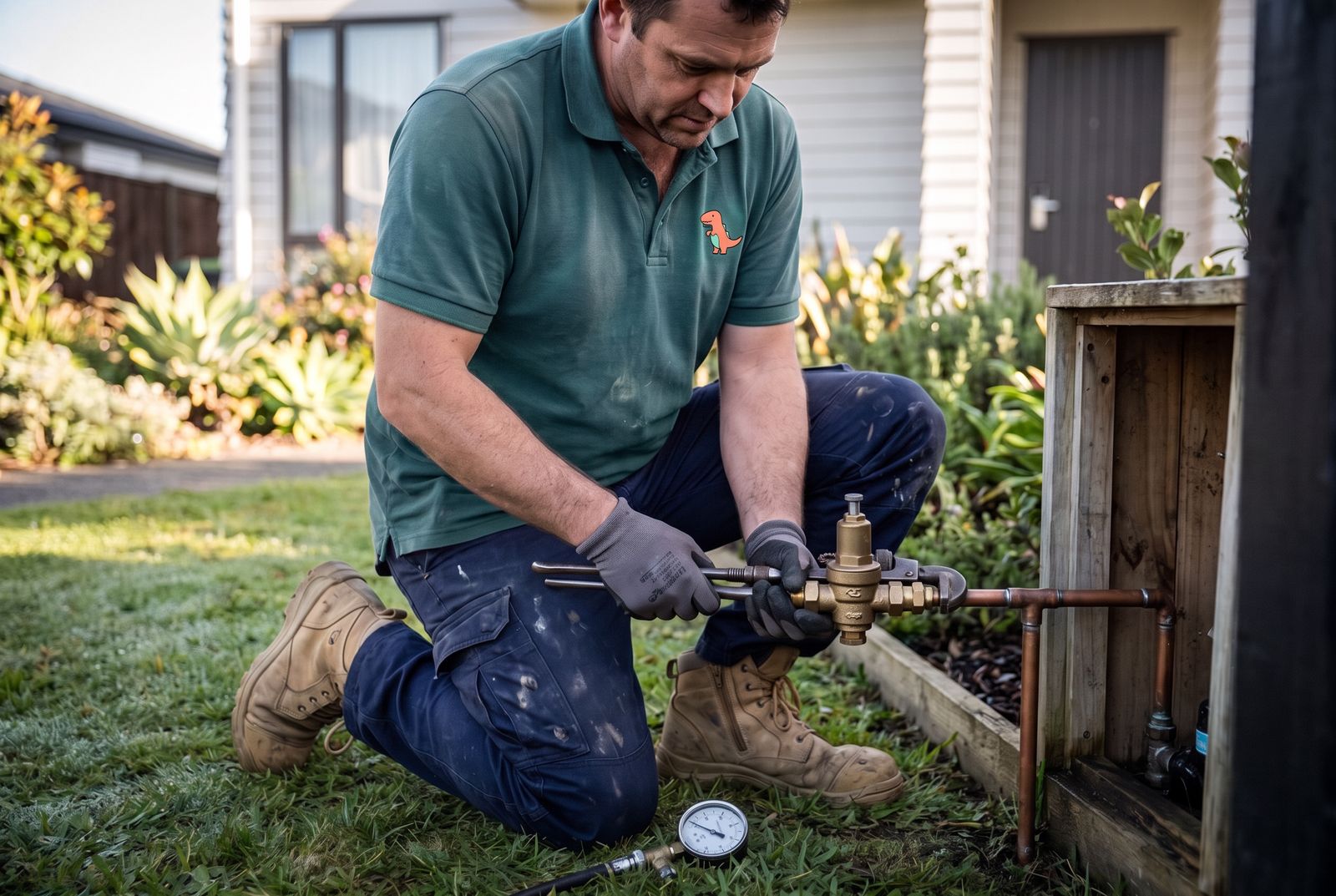
Pressure Reducing Valves
Mains pressure in parts of Auckland is high enough to damage tapware, burst flexi hoses and wear out cylinders early.
View serviceRead Next
Low Water Pressure? How to Increase It in Your Shower and House
To increase water pressure in your shower, first clean the shower head and check that the toby and every isolation...
Read article
Grey Polybutylene Pipe in NZ: Should You Replace It?
Polybutylene is a grey or black plastic water pipe used widely in New Zealand homes from the late 1970s to the mid...
Read article
How to Fix a Leaking Tap: Mixers, Handles and Outside Taps (NZ)
To fix a leaking tap, turn off the water to that tap, work out whether it uses a rubber washer or a ceramic cartridge,...
Read articleSources
More plumbing advice from the Cheeky's Plumbers team.
