
A new septic tank system in NZ typically costs $10,000 to $25,000 installed, according to Selwyn District Council, with operating and maintenance of about $190 to $720 a year depending on the system. In Auckland, a basic septic tank must be inspected every three years and an aerated or secondary system every six months, so budget for servicing as well as the install.
If your home is beyond the reach of Watercare's network, the septic system is your private sewage plant. Lifestyle blocks around Kumeū, Pukekohe and the rural fringe of West Auckland rely on them, and their cost does not stop at the day the tank goes in.
This guide covers the whole-life cost of a septic system: installation and replacement, choosing the size and material, how often it needs pumping, the Auckland Council rules and what to know before building near one.
How much does a septic tank cost to install in NZ?
Selwyn District Council puts the cost of a new septic tank at between $10,000 and $25,000, and annual operating and maintenance at $190 to $720 depending on the type of tank and the checks it needs. Those are council estimates from Canterbury, so treat them as a starting range for Auckland rather than a quote.
The tank is often the smaller part of the bill. A wastewater design, consents, excavation, the disposal field, and any pump needed to lift effluent uphill all add up. Our septic tanks service page explains what an inspection and quote involves.
Replacing a failed system usually costs about the same as a new install, and sometimes more, because the old tank has to be pumped, decommissioned and either removed or filled, and a new disposal field may need a fresh area of ground. That is why maintenance is the cheapest line in any septic budget.
| Cost item | What it covers | What pushes it up |
|---|---|---|
| Design and consent | Site and soil assessment, system design, building consent | Poor soils, steep sites, sensitive streams nearby |
| Tank | Concrete or plastic tank, lids and baffles | Larger capacity, secondary treatment units |
| Disposal field | Trenches or beds that return treated water to the soil | Heavy clay, high groundwater, limited flat land |
| Excavation and drainlaying | Digging, laying pipes, connecting the house | Rock, tight access for machinery, long pipe runs |
| Pump and controls | Pump chamber and float switch where gravity will not work | Field uphill from the house, alarms and telemetry |
What size septic tank do I need?
Tank size is set by the design for your property, based mainly on how many people the house can hold, which is usually judged by the number of bedrooms, plus the expected daily water use. A larger house needs a larger tank and a larger disposal field.
In Auckland, systems are designed to Auckland Council's GD06 guidance on on-site wastewater management, which replaced the older TP58 manual. If you are adding bedrooms or a minor dwelling, have the system checked, because more people means more wastewater than the original design may allow for.
Concrete or plastic septic tank: which is better?
Both work well when correctly installed, so the choice usually comes down to the site. Concrete tanks are heavy and robust, resist floating in high groundwater and suit sites a truck can reach. Plastic tanks are light, easier to carry into tight or steep sections, and do not crack from settlement in the same way.
Ground conditions decide a lot. Around Kumeū, much of the river valley was traditionally wetland and flood plain, so groundwater and anchoring need careful thought. Steep bush sections in Titirangi often favour lighter tanks that can be placed without heavy machinery. Whatever the material, the excavation and pipe work belong with an experienced drainlaying team.
Septic system due for a check?
Cheeky's Plumbers inspects, services and repairs septic systems on rural and semi-rural Auckland properties, with a written report and a fixed price before any work.
How often should a septic tank be pumped out?
Auckland Council's guidance is that sludge and scum need pumping out when they fill half the volume of the tank, and that a basic septic tank is inspected every three years. Many households find that means a pump-out every few years, but the measurement during the inspection is what decides it.
Auckland Council's West Auckland septic tank booklet describes a council contractor pumping out tanks every three years for properties in its programme, with a letter sent beforehand. Check your own rates and records to see whether that applies to you.
Pump-outs are not the whole service. Baffles, outlet filters, lids and the pipes to the field all need checking, and where effluent is pumped uphill the pump and float switch need attention too. We look after those wastewater pump stations as part of a full service.
What are the septic tank rules in Auckland?
The rules for inspecting and maintaining on-site wastewater systems in Auckland are set by the Auckland Unitary Plan. Auckland Council says a primary system, such as a basic septic tank, needs inspecting at least every three years, and a secondary or tertiary system, such as an aerated unit, every six months.
Owners must send service records to council, and council has said it needs proof that all parts have been checked and are in good working order. A pump-out invoice on its own may not be enough. The council also warns that failing to maintain a system can lead to a fine or penalty.
New systems and significant alterations need building consent, and some discharges also need resource consent under chapter E5 of the Unitary Plan. Your designer and installer should handle these as part of the job.
How close can you build to a septic tank in NZ?
There is no single distance that suits every site. Separation from buildings, boundaries, bores and streams is set by the system's design and consent, under the Unitary Plan rules and GD06 guidance, and it varies with soil type and the level of treatment.
Before planning a deck, extension or minor dwelling, find out exactly where the tank and disposal field are. The property file from Auckland Council often holds the original consent and as-built plans. Never build over a disposal field, and keep vehicles off it, because compacted soil cannot absorb treated water. If plans are missing, a camera inspection and a site visit can trace the pipes and confirm where everything sits.
Getting help in rural Auckland
A well-designed septic system that is serviced on time can run quietly for decades. Most expensive failures start small: a cracked lid letting stormwater in, a blocked outlet filter or roots in the pipe to the field.
Cheeky's Plumbers services, repairs and installs septic systems around the rural edge of the city, including lifestyle blocks served by our West Auckland plumbers and our team in Kumeū. You can book online for an inspection and a fixed price before any work starts.
Frequently Asked Questions
What should not go into a septic tank?
Keep wipes, sanitary products, fats, paints, solvents and strong chemicals out of the drains. Bleach and antibacterial cleaners in large amounts kill the bacteria that break down waste. Spread laundry across the week so the tank is not flooded in one go.
What are the signs my septic tank is failing?
Slow drains throughout the house, gurgling, sewage smells outside, soggy or unusually green ground over the disposal field and wastewater surfacing are all warning signs. Get an inspection early, because a clean-out is far cheaper than a new field.
Do I need a septic inspection when buying a rural property?
It is wise. Ask for the service records the owner has sent to Auckland Council, and get an independent inspection of the tank, field and any pump. A failing system can cost tens of thousands to replace.
Can tree roots damage a septic system?
Yes. Roots find their way into pipe joints and disposal trenches, blocking flow and cracking pipes. Keep large trees well away from the tank and field, and check the lines with a camera if drains slow down.
Can I connect to the town sewer instead of a septic tank?
Only where Watercare's network reaches your property and capacity allows. Many rural Auckland homes cannot connect, which is why septic systems remain common. Ask Watercare whether a connection is possible at your address.
Our Services
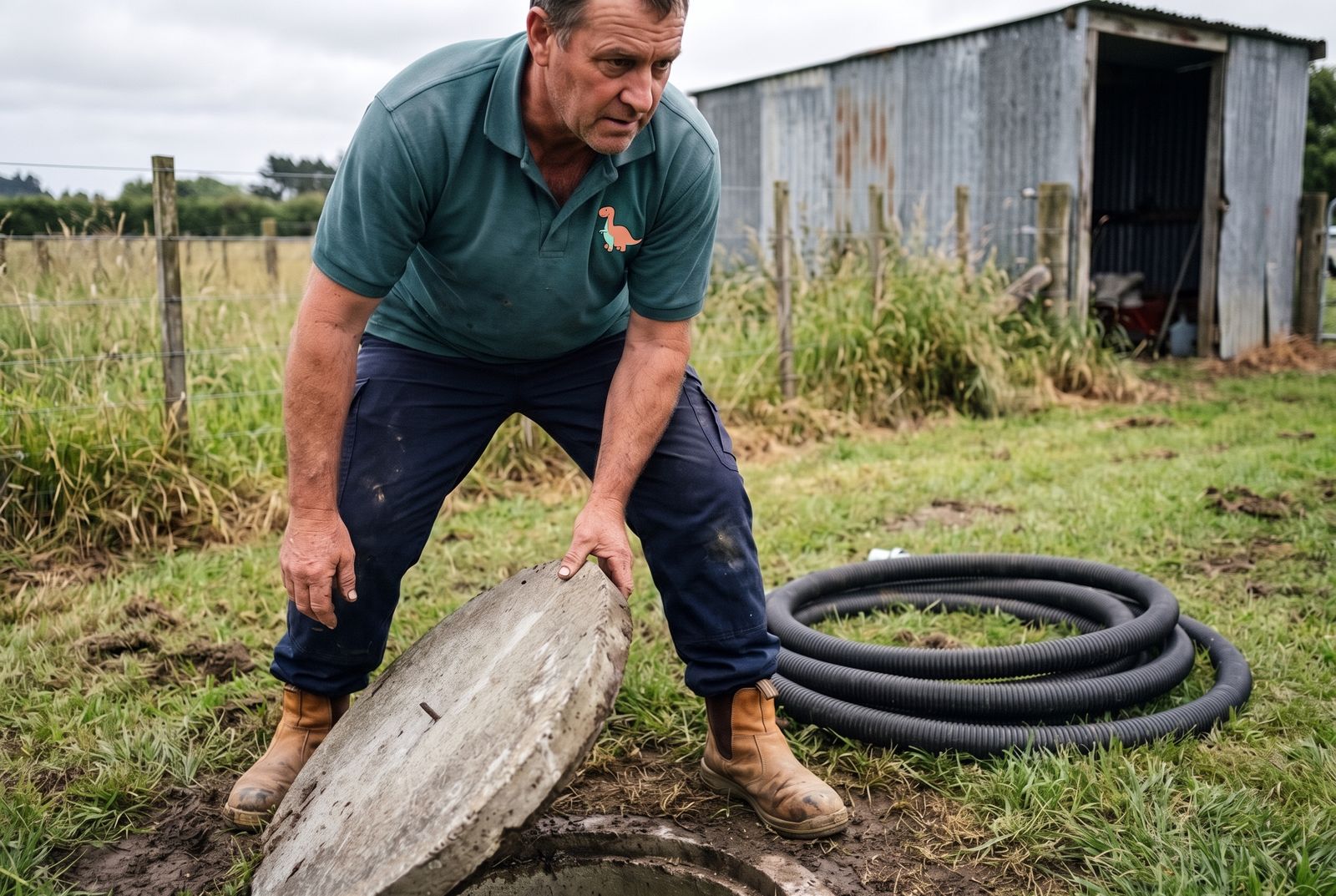
Septic Tank Cleaning
Septic tanks keep rural and semi-rural Auckland homes running, from Kumeū to Clevedon.
View service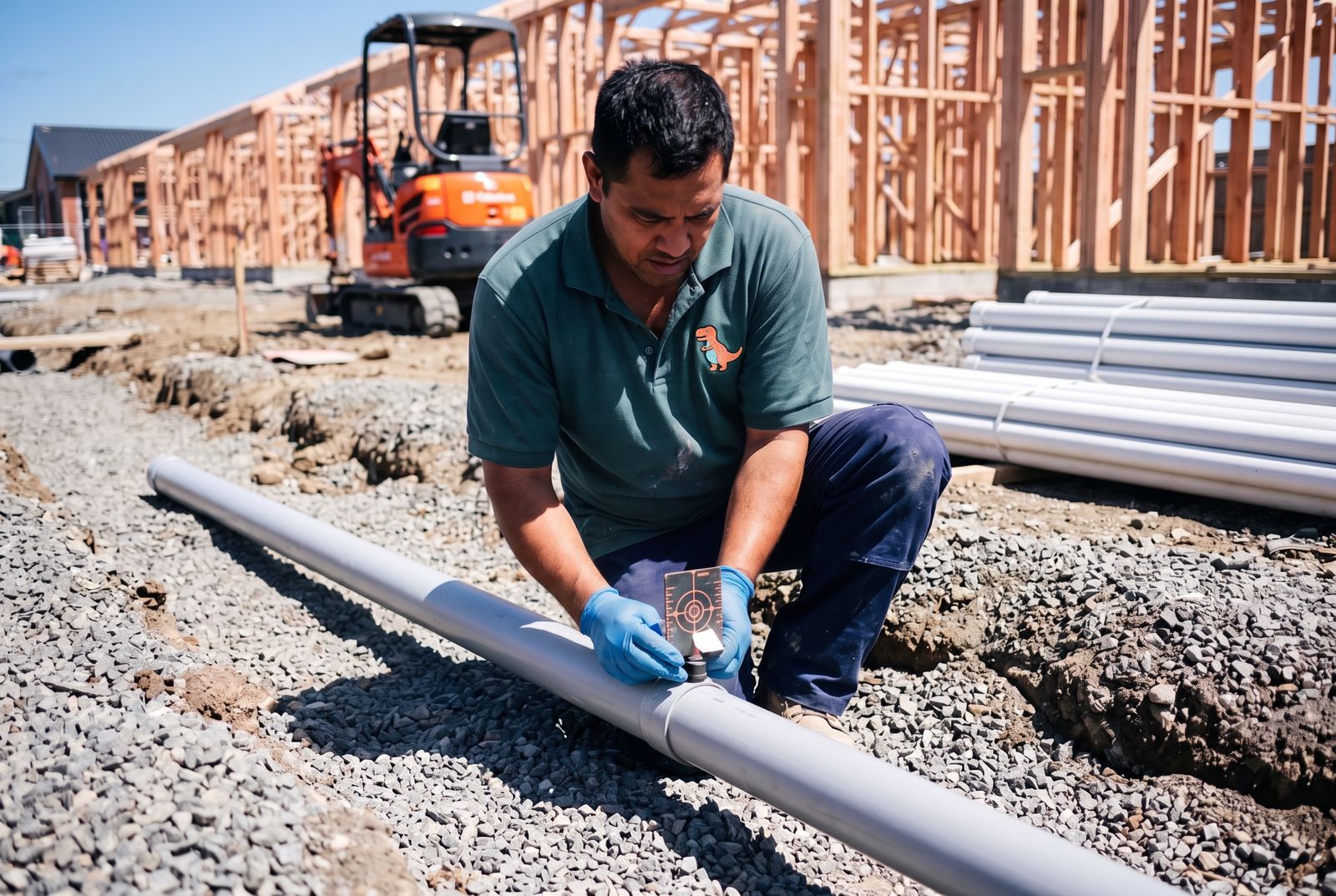
Drainlaying
New drains for extensions, new builds, minor dwellings and subdivisions, laid by certifying drainlayers.
View serviceWastewater Pump Stations
Private wastewater pump stations, grinder pumps and stormwater sump pumps serviced, repaired and replaced across Auckland.
View serviceRead Next
Best Water Filter for NZ Homes: Town Supply vs Tank Water
The best water filter for a NZ home depends on where your water comes from. On treated town supply, such as most of...
Read article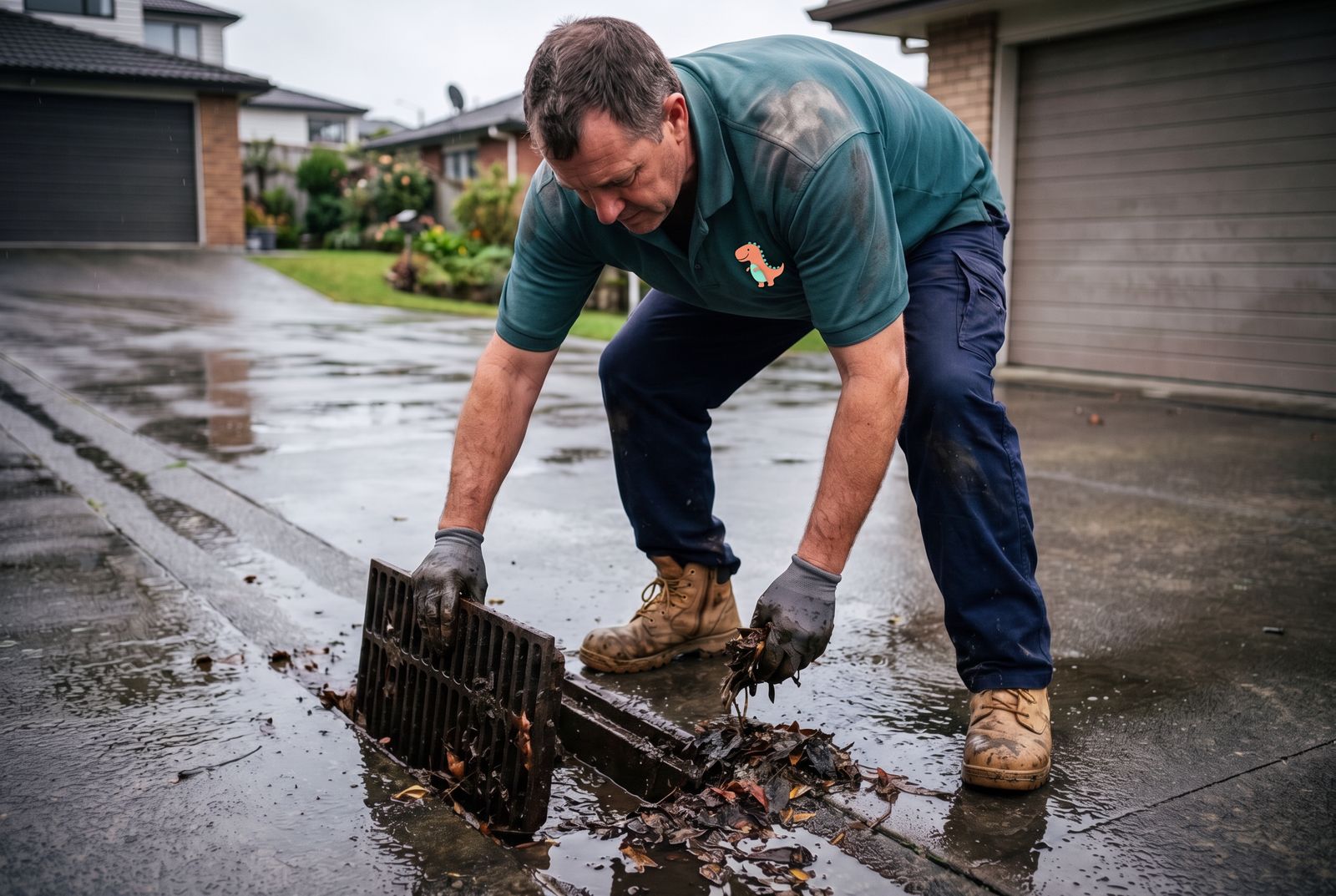
How to Unblock a Drain: Kitchen, Shower and Outside Drains
The easiest way to unblock a drain is mechanical: remove the plug or grate, pull out hair or debris, then use a plunger...
Read article
How Much Does It Cost to Replace a Hot Water Cylinder in NZ?
The cost to replace a hot water cylinder in NZ depends mostly on the type you choose. A like-for-like electric swap is...
Read articleSources
More plumbing advice from the Cheeky's Plumbers team.
